
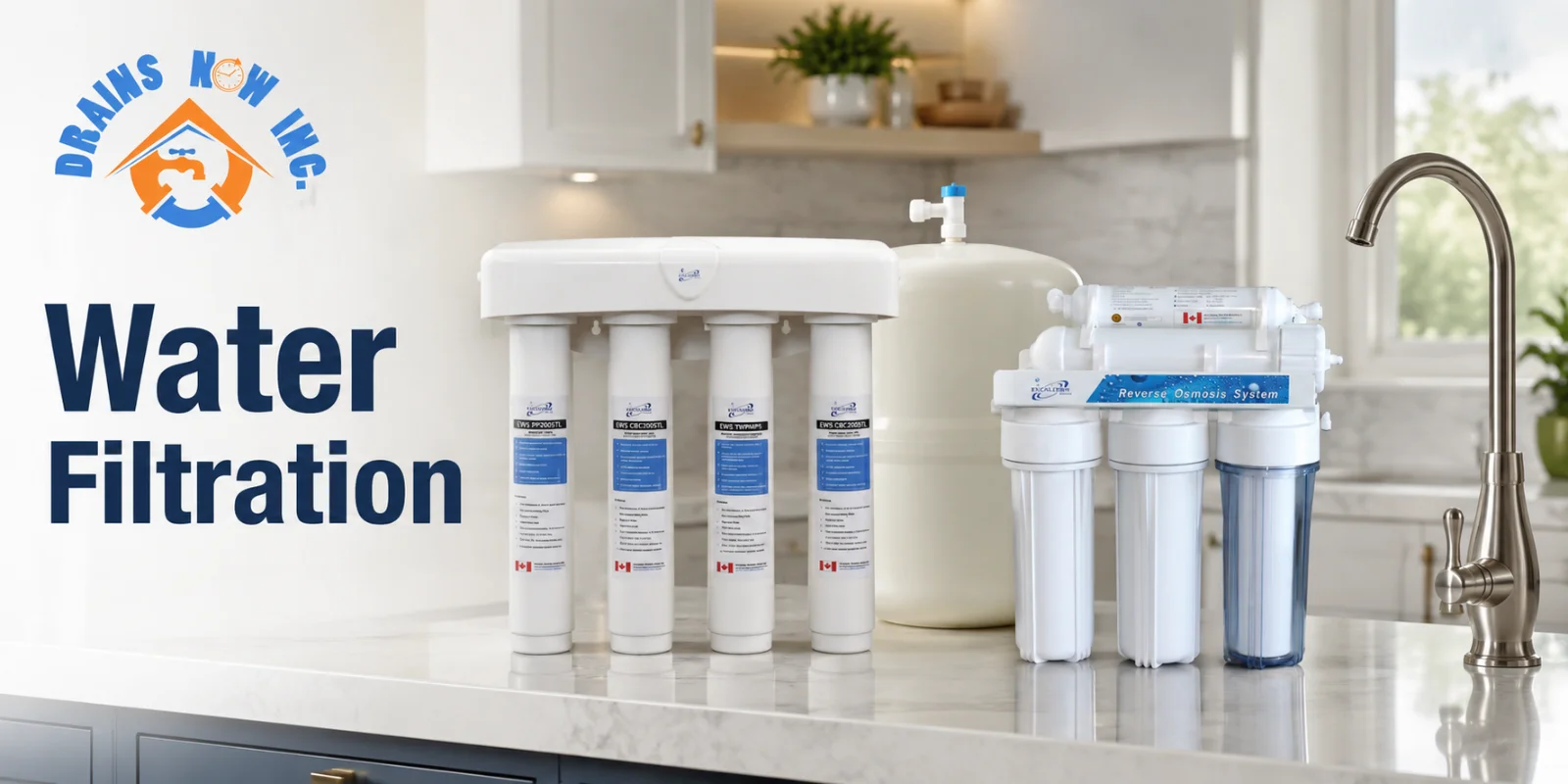
If your household buys bottled water by the case, filters every jug, or just doesn’t love the taste from the tap, you’ve probably wondered about reverse osmosis. Here’s the honest picture — what RO does, what it doesn’t, and when it’s genuinely worth it.
What reverse osmosis actually does
An RO system forces water through a membrane fine enough to remove dissolved solids, chlorine taste and odour, lead, and most contaminants — delivering bottled-quality drinking water from a dedicated tap at your kitchen sink. Most home systems fit neatly under the sink and include pre- and post-filters plus a small storage tank.
RO vs. a water softener — they’re not the same thing
A softener treats all the water in your home for hardness, protecting your pipes, fixtures, and appliances. RO treats the water you drink and cook with, for taste and purity. Many Brantford-area homes benefit from both: the softener protects the house, the RO makes the drinking water excellent — and the softener actually helps the RO membrane last longer.
When RO is worth it
- You’re spending real money on bottled water every month
- You notice chlorine taste or odour from the tap
- You want better water for coffee, cooking, and baby formula
- You’re on a well or have specific water-quality concerns
- You already have a softener and want drinking water to match
What it costs to run
Very little — a set of filter changes roughly once a year and a membrane every few years. Compared to a bottled-water habit, most households come out well ahead within the first couple of years, without the plastic waste.
Frequently asked
Same-day & 24/7 emergency service across Brantford & Southern Ontario.